Nowadays, for us, toxic ads may somehow difficult to avoid due to the freedom of sharing information and the utility of big data. But we can still explore great hopes from some remarkable ads. Recently, we can’t deny that more and more beauty ads are making great progress: better presentation, credible instruction, and welcoming attitudes to customers. Also, I think such development is not only taken place in the field of beauty ads but can be in whole advertisement industry. I made up my mind presenting some great examples of beauty ads because I assure that ads are those can bring great hope to customers.
‘De Pelsmacker, Dedock, and Geuens (1998) identified three ad dimensions: emotional content, informational content, and format. De Pelsmacker and colleagues posited that these three dimensions influence both affective and cognitive response to ads that, in turn, affect brand attitude, which then influences purchase intentions.’Yvonee Terry-Mcelrath, 2006). There were days I was looking at myself in the mirror and thinking what I really look likes. I thought the mirror may tell me, but I still didn’t believe the person in the mirror because I look at the projection by my eyes, which are connected to my mind and depend on my intuition. Then I found that others’ words and impression on me can be a measurement of the ‘real’ me. In recent days, individuals receive approximately 10,000 ads per day, and they are subtly influencing our self-identities and self-cognition since we can’t prevent ourselves from receiving the information from ads.
Beauty advertisement, as the one of the highest viewing rate ads, is an essential factor that shape viewers’ self-cognition and confidence. When customers saw a beauty advertisement that presents how the products turning a bad skin condition into good ones, customers may feel that they are probably in bad skin condition even they aren’t. ‘Ads for beauty-enhancing products seem to make consumers feel that their current attractiveness levels are different from what they would ideally be.’(University of Chicago Press Journals, 2010) I might agree with this when I wrote previous post. However, when I think this aspect from another perspective, I find that the customers may just want their skin to be better, and the ads may not damage consumers’ self-esteem in order to sell the products. There is still a controversy behind the fact, and such confliction enlighten me to think of the way that beauty companied present their products.
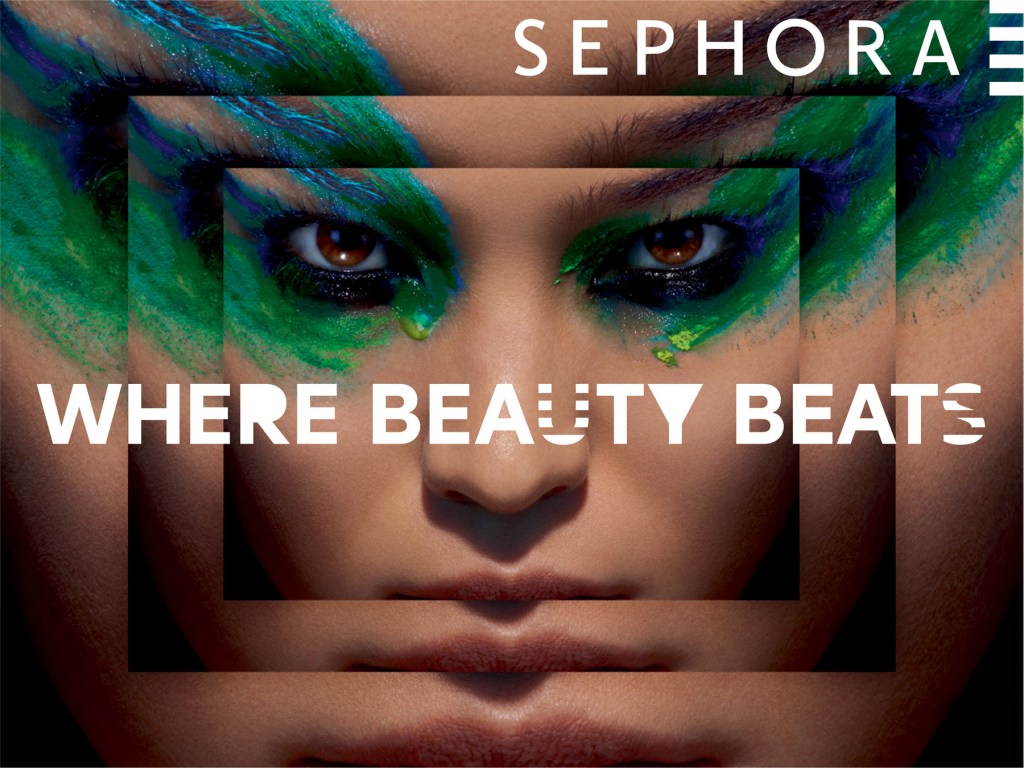
When individuals receive information from ads, individuals bring out distinctive understanding basing on personal situations. And that’s where the negative influence majorly coming from. However, there are ways to minimize such misunderstanding and misleading effect. In the ads from Kimono, the clothing brand established by Kim Kardashian, there are models with different statures wearing same products on the scene. Encouraging people of all body types to wear same product, Kimono’s ads bring respect and inspiration to the consumers who used to afraid of wearing such product. Additionally, Sephora, the multinational chain of beauty store, is using a conversational way to advertise their product. When the ads pop up, the ads viewers are allowed to type in the ads to talk about how they feel about their skin condition, and the ads may give a summary of some products relating to certain conditions. These kinds of ads do grab my attention, and I think the companies are playing a role of listener instead of seller to the consumers. It can not only satisfy the true demands of customers but make profit for the company.
I’m writing this post to bring information that there are top companies are doing good jobs in advertising, showing respect and understanding to us. When we confront some aspects, we may see both pros and cons of them before we make the conclusion. Hopefully the examples I gave may bring you novel judgements toward the advertisement.
References
- University of Chicago Press Journals (2010). How do beauty product ads affect consumer self esteem and purchasing?
- Yvonne Terry-mcelrath, Melanie Wakefield, Erin Ruel, George l. Balch, Sherry Emery, Glen Szczypka, Katherine Clegg-Smith, Brian Flay (2006). The Effect of Antismoking Advertisement Executional Characteristics on Youth Comprehension, Appraisal, Recall, and Engagement
 Moonlightmydream